
Since its last update on April 19, 12 more illnesses have been reported, the CDC said.
From: https://www.webmd.com/food-recipes/food-poisoning/news/20180511/more-illnesses-in-salmonella-outbreak-tied-to-eggs?src=RSS_PUBLIC
Worldwide, more than one in seven adults smoke tobacco, and one in five reports at least one occasion of heavy drinking in the past month, the review of 2015 data found.
Seven out of 10 oncologists surveyed in the United States said they aren't informed enough about the risks and benefits of medical marijuana to recommend its use to patients, according to findings published May 10 in the Journal of Clinical Oncology.
Follow me on Twitter @JohnRossMD
If you’re the kind of person who avoids public bathrooms at all costs, you may feel validated, as well as disturbed, by a new study from researchers at the University of Connecticut and Quinnipiac University. They suspected that hot-air hand dryers in public restrooms might be sucking up bacteria from the air, and dumping them on the newly washed hands of unsuspecting patrons.
To test this theory, scientists exposed petri dishes to bathroom air under different conditions and took them back to the microbiology laboratory to look for bacterial growth. Petri dishes exposed to bathroom air for two minutes with the hand dryers off only grew one colony of bacteria, or none at all. However, petri dishes exposed to hot air from a bathroom hand dryer for 30 seconds grew up to 254 colonies of bacteria (though most had from 18 to 60 colonies of bacteria).
Were the bacteria multiplying inside the hand dryers, or were they being pulled into the hand dryers from the air inside the bathroom? To answer this question, the researchers attached high-efficiency particulate air (HEPA) filters to the dryers, which would eliminate most of the bacteria from the air passing through the dryer. When they exposed petri dishes to air from the hand dryers again, the quantity of bacteria in the dishes had fallen by 75%. As well, the researchers found minimal amounts of bacteria on the nozzles of the hand dryers. They concluded that most of the bacterial splatter from the hand dryers had come from the washroom air.
How did the bacteria get into the air in the first place? Unfortunately, every time a lidless toilet is flushed, it aerosolizes a fine mist of microbes. This fecal cloud may disperse over an area as large as six square meters (65 square feet). Aerosols from flushed toilets may be especially harmful in the hospital setting as a means of spreading Clostridium difficile.
Is there any good news from this study? Well, the vast majority of the microbes that were detected do not cause disease in healthy people, with the exception of Staphylococcus aureus. Some of the bathroom bacteria, such as Acinetobacter, only cause infections in people in the hospital, or in those with weak immune systems. The others that were found are relatively harmless. In addition, air from real-world bathrooms may contain fewer bacteria than the bathrooms in the study. The sampled restrooms were located in a university health sciences building, and at least some of the bacteria came from experiments going on in laboratories within the building.
So what’s a person to do to avoid picking up bacteria in a bathroom? You should still dry your hands, as not drying them after washing them helps bacteria to survive on them. Paper towels are the most hygienic way to dry your hands. For this reason, use of paper towels is already routine in health care settings. You may also wish to avoid jet air dryers, which have also been associated with the spread of germs in bathrooms. And remember that your chances of picking up a serious pathogen in a restroom are small. Direct contact with other people is much more likely as a means of acquiring infection.
The post The bacterial horror of hot-air hand dryers appeared first on Harvard Health Blog.
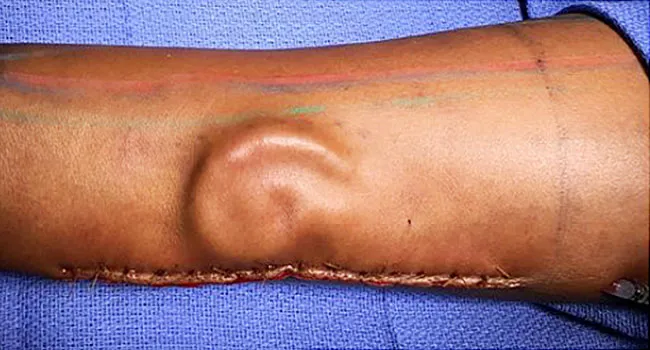
Burrage is scheduled to have two more surgeries in what is believed to be the first such case in the military branch.

Most women begin their journey through pregnancy as soon as those little lines appear. As for me, I started my pregnancy journey eight months before those little lines would make their appearance, an entire year and a half before my son was born.
Living with type 2 diabetes, I already tried to live a healthy lifestyle, but I was nowhere near being prepared for pregnancy. Managing with oral medications, an okay diet and the occasional exercise, my A1C was hovering around 8.3. I needed to improve my blood glucose control to prepare for a healthy (but still high-risk) pregnancy. Working with my endocrinologist, I came up with a plan—that’s when my pregnancy journey truly began.
I overhauled my diet, began exercising five days a week and visited a maternal-fetal specialist for preconception counseling. As I got closer to my goal, I switched to insulin via multiple daily injections. Seven months later, my doctors, my husband and I felt prepared for a healthy pregnancy.
Finally! Those little lines appeared for me, jumpstarting “phase two” of my pregnancy journey.
Now that I was actually pregnant, it felt like the stakes had been raised. My blood glucose didn’t just matter to me anymore; there was another life affected by the number that appeared on my meter. Pregnancy is supposed to be one of the most joyous and exciting times of your life, but for me, diabetes was there, making me face reality and make tough decisions. People would ask what I found most difficult about pregnancy. One word: diabetes.
I couldn’t indulge in my cravings (Sorry, chocolate fudge Pop-Tarts). I had to try to work out even when I was dead tired and swollen. I had to poke myself with a needle and inject insulin every time I ate (which was a lot!). I had to hold myself—and my blood glucose—to high standards. I could not take a day off from diabetes.
One night, I stood in my kitchen crying my eyes out. I don’t remember what the number was, but my blood glucose was high. All I remember was the sweeping feeling of disappointment and despair. All I could do was stand there, worrying about how it could affect my growing baby and blaming myself for not doing better. My husband wrapped me up in his arms and told me, “You’re doing an amazing job.”
On April 25, 2017, I gave birth to my son, Tatum—a healthy baby at eight pounds, 12 ounces! I remember thinking to myself, “I did it!” I wasn’t referring to giving birth. I was thinking about how I made it through my high-risk, diabetes-laden pregnancy complication-free.
Now my focus is to stay healthy for him, to be able to chase him around the park, to demonstrate healthy eating habits for him and to enjoy this chubby miracle that I call my son.
-Lynda Jimenez, Associate Director, Online Strategy & Operations, American Diabetes Association
Questions about diabetes and pregnancy? Explore our online resources here.


